1Does the factory match your actual product category?
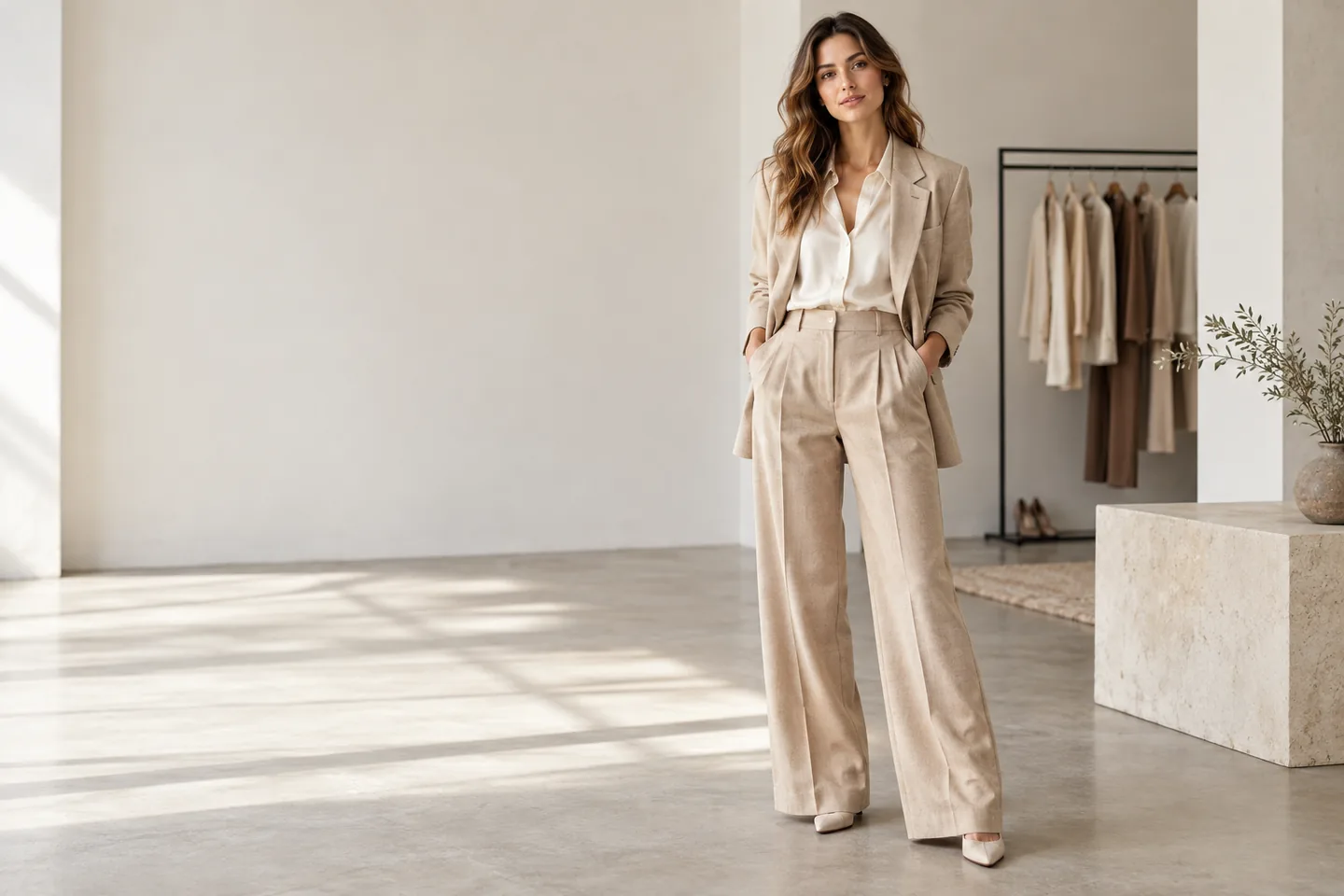
A factory may be capable of making clothing without being a strong fit for your collection. Contemporary womenswear often combines smart casual dresses, blouses, trousers, skirts, matching sets and lightweight tailoring. Ask for evidence of similar construction, fabric handling and fit requirements.
A woven-fashion factory is usually a better starting point for draped blouses or structured dresses than a supplier focused mainly on basic knit T-shirts. Product-category fit reduces avoidable sample revisions.
2Can it manage a collection rather than one isolated style?
A contemporary range needs continuity. The factory should help identify shared fabrics, trims, labels, size rules and finishing standards across the collection. This improves colour consistency and makes repeat production easier.
- Which styles can share the same fabric or trim?
- Which styles require separate fit blocks?
- How should colours and sizes be divided?
- Which styles should be sampled first?
3How will fabric be approved before cutting?
Fabric affects drape, opacity, shrinkage, colour, hand feel and sewing performance. Request fabric composition, weight, width and available colours. For important styles, approve a swatch or cutting before the factory purchases and cuts bulk material.
Also ask whether fabric minimums differ from garment production quantities. A factory cannot always divide a mill or dye-lot minimum across very small colourways.
4What is included in the sample process?
Confirm the sample type, price, expected timing and revision route. Clarify whether the first sample uses substitute fabric, whether pattern changes are included and what must be approved before bulk production.
For a useful review, measure the garment against the specification and check fit, balance, seam appearance, closures, pockets, lining, pressing and label placement.
5Is the production quantity quoted per style, colour or order?
Never accept a vague minimum. Ask whether the quoted quantity applies to one style, one colour or the full order, and whether sizes can be mixed. Naidinise reviews qualified contemporary womenswear projects from 100 pieces per style; fabric, colour split, size range and construction determine final feasibility.
6Should your project use OEM or private label manufacturing?
OEM clothing manufacturing is most suitable when the tech pack, measurements and bill of materials are ready. Private label manufacturing is useful when production must also include woven labels, care labels, hangtags, packaging and brand-specific repeat-order requirements.
If your project begins with product references rather than full technical files, explain which details are fixed and which can be adjusted during development.
7How does the factory control fit across styles and sizes?
Ask which base size will be sampled, who approves measurements and how grading will be reviewed. Contemporary trousers, dresses and jackets need different fit checkpoints. The approved sample and final measurement table should remain the bulk-production reference.
8What quality checks happen during production?
A useful QC answer should cover fabric inspection, cutting, sewing, measurements, labels, finishing and packing. Ask when defects are corrected and whether pre-shipment photos, measurement reports or third-party inspection can be arranged.
Quality cannot be judged only from one attractive sales sample. The real question is how the factory keeps bulk production aligned with the approved standard.
9Are the sample and bulk timelines realistic?
Timelines depend on fabric availability, sample revisions, trims and approval speed. Naidinise typically plans 7–20 working days for sample development and 25–35 working days for bulk production after approval and deposit. Confirm the actual schedule for your styles before setting a launch date.
10Can the factory communicate decisions clearly?
Good communication should turn open questions into written decisions. Before paying a deposit, confirm who owns the project, which channel will be used, how often updates are sent and how changes are recorded. Vague answers during sampling usually become more expensive during bulk production.
What to include in your first RFQ
- Tech pack, clear reference photos or a reference garment.
- Quantity by style and colour, plus size range.
- Target fabric, lining, trims and construction details.
- Woven labels, care labels, hangtags and packaging requirements.
- Destination market, target date and shipping expectations.
Use the clothing manufacturer RFQ template if you want a structured first message.
What is smart casual womenswear?
Smart casual womenswear combines polished everyday pieces with relaxed, wearable construction. Common products include dresses, blouses, shirts, trousers, skirts, coordinated sets and light tailoring for work-to-weekend wardrobes.
For a China manufacturer review, send the product references, fabric direction, size range, labels, packaging, destination market and a qualified quantity of at least 100 pieces per style. Naidinise can then assess OEM or private label feasibility before sampling.
Smart casual dress manufacturer China · Contemporary womenswear service · Clothing factory quote template
Contemporary Womenswear Manufacturer FAQ
What should I ask a contemporary womenswear manufacturer first?
Ask about relevant product experience, fabric sourcing, sampling, production quantity, QC, communication and the information needed for a realistic quote.
Should I choose OEM or private label production?
Choose OEM when your technical package is ready. Choose private label production when you also need labels, hangtags, packaging and repeat-order brand consistency.
How do I compare womenswear samples?
Compare fit, measurements, fabric hand feel, drape, seam quality, closures, pressing, label placement and consistency with the approved specification.
What should I send for a quote?
Send a tech pack or references, quantity by style and colour, size range, target fabric, construction details, labels, packaging, destination market and required date.
Ask Xiao to review your collection
Send your product references, expected quantity per style, fabric direction, target market and launch date for a practical factory-fit review.
WhatsApp XiaoView manufacturing service